
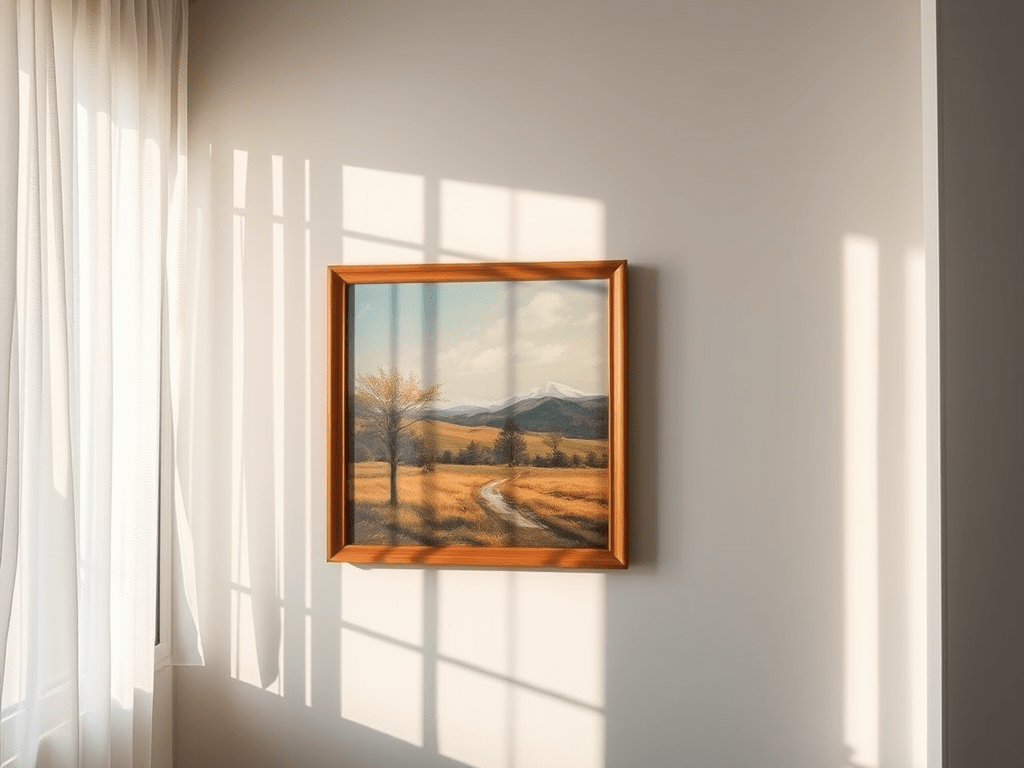
Lighting plays a vital role in photographing artwork, and using the right lighting can make all the difference between a mediocre photo and a stunning one. Here’s how you can achieve the best lighting with minimal equipment and your smartphone.

Use Natural Light Whenever Possible
Natural light is your best friend when it comes to photographing art. It provides a soft, even illumination that reduces harsh shadows and maintains true color accuracy. The best time to shoot is in the morning or late afternoon when the sunlight is softer. Place your artwork near a window that allows indirect sunlight to wash over the piece.
Avoid Direct Sunlight
While natural light is great, direct sunlight can cause harsh shadows, glare, and overly bright spots in your photo. If your light source is too strong, diffuse it by using a sheer curtain or bouncing the light off a white wall to create softer, more even lighting.
Use Two Light Sources for Balance
If you can’t access good natural light, use two artificial lights positioned at 45-degree angles on either side of the artwork to reduce shadows. This setup ensures that the light is evenly distributed across the piece without creating unwanted shadows or reflections.
Use a Diffuser for Even Lighting
If the lighting is too harsh or creates glare on glossy surfaces, use a diffuser. You can make one by placing a white sheet or translucent material between your light source and the artwork. This will soften the light and make your photo more visually appealing.
Avoid Flash
Never use your smartphone’s flash when photographing artwork. It creates bright spots, washes out colors, and adds unnecessary glare to your images. Natural or soft artificial light is always a better option.
Check the White Balance
Many smartphones have automatic white balance settings, but it’s always good to check and adjust it manually if needed. Proper white balance ensures the colors in your artwork appear as accurate as possible in the photograph.
With these tips, you can create professional-looking images of your artwork using only your smartphone and the right lighting techniques. Proper lighting enhances your artwork’s true colors, textures, and details, making it stand out in any setting.

 VibrantCast Info Hub